
Friday, 27 January 2012
Sad news
I've just heard the very sad news that Thomas Samoht, author of the Westcountry Folklore blog, has sadly passed away. He will be sorely missed by everyone who had the pleasure of knowing him in the folklore community. His blog has been such an inspiration and a wonderful source of knowledge, and his passion for folklore truly brought his tales to life, and he certainly had plenty of strange and fascinating westcountry tales to tell! Thomas was always happy to lend a hand and share his knowledge whenever I had trouble finding a source or tracking down the origins of a story, and without his help I wouldn't have found nearly as many interesting faery places to visit in Dartmoor last summer!! You will be missed Thomas, and the Faery Folklore of the UK group won't be the same without you. My thoughts are with his wife, daughter, and family at this very sad time.


Thursday, 12 January 2012
Corrie of the Urisks, Trossachs

"By many a bard, in Celtic tongue,
Has Coire-nan-Uriskin been sung;
A softer name the Saxons gave,
And call'd the grot the Goblin-cave,
Gray Superstition's whisper dread
Debarr'd the spot to vulgar tread;
For there, she said, did fays resort,
And satyrs hold their sylvan court."
- Lady of the Lake, Sir Walter Scott
Located next to Loch Katrine and situated at the side or base of Ben Venue, can be found the Corrie of the Urisks. It goes by many names, Coirre nan Uriskin, Coire na Uruisgean, Coir-n'an-Uriskin, Cove of the Goblin, Cove of the Satyrs, Cove of the Fairies, Den of the Ghosts, Den of the Wild Men, The Goblin's Cave, the names are quite possibly endless. To add to the mystery, the location of the site itself also seems to vary, with some refering to it as being at the base of Ben Venue, others saying it can be found on the side of the mountain, some say it is a cave, and others say it is a cove formation in the rocks. To add to the confusion even more, there is a sign post on the walk along the edge of Loch Katrine that points out some rocks that are also home to Urisks, and it's completely on the opposite side of the loch to where the Ordnance Survey map marks the cove as being. The sign refers to the corrie as being "near here" but gives no further directions.
'An historical account of the settlements of Scotch Highlanders in America prior to the peace of 1783' by John MacLean (1900) includes an illustration of the Coire-nan-Uriskin that can be seen here and describes the cove as being "situated near the base of Ben Venue", and a sketch of Coire nan Uriskin drawn in 1831 by Joseph Mallord William Turner can be seen here on the Tate Collection website.
Most agree that the habitants of the cove are Urisks, usually said to be furry goat-like creatures, similar to Brownies. Patrick Graham describes the cove in his 'Sketches of Perthshire' (1806):
"Ben Venue is rendered venerable in the superstition of the natives, by the celebrated Coirre nan Uriskin (the cove or recess of goblins) situated on the northern side of the mountain, and overhanging the lake in gloomy grandeur. The urisks were a sort of lubberly supernaturals, who, like the Brownies of England could be gained over by kind attentions, to perform the drudgery of the farm; and it was believed that many families in the Highlands had one of their order attached to it. They were supposed to be dispersed over the Highlands, each in his own wild recess; but the solemn stated meetings of the order were regularly held in this cave of Ben Venue."In William Wilson's 'The Trossachs in Literature and Tradition' (1908) he quotes a 'Mr Ferguson' who offers a theory for the naming of the cove:
"The Urisks, I think, were the remnants of the Druids, driven into the wilds and persecuted by a rival religion, the Fingalian. The Urisks would be clothed in sheep or goat-skins, hence their 'hairy appearance, having a figure between a goat and a man.'"William Stirling, in 'Notes, historical and descriptive, on the priory of Inchmahome' (1815) traces the Urisks back to the story of the Fairies of Menteith, writing that " in recompence of their Herculian toils, unfinished as they were, gave them a grant of the northern shoulder of one of his mountains, Ben-Venu. We are thus enabled so far to trace the history of the Urisks, previous to their settlement in this romantic district of the Monteath estate." (Blog entry on the Monteith Fairies coming soon!).
When in the Trossachs, we viewed the Corrie of the Urisks from the opposite side of Loch Katrine. However, Stott's 'Enchantment of the Trossachs' (1992) tells that you can reach it by a rough footpath from the Loch Achray Hotel, but alas we ran out of time and didn't get a chance to attempt that walk.
Before reaching the Corrie we came across this well illustrated Urisk information display...


We walked further around the loch until we could finally see the Corrie of the Urisks. I can't be sure that the location I've interpreted as the Corrie is correct, and would be happy to receive any feedback on this, I've identified it using the location given on the Ordinance Survey map, and believe the corrie to be the rock valley formation in the side of the hill, or possibly a cove at the base, from this distance it was difficult to see too much detail in the rocks. Of this however I'm sure, there's definitely no shortage of rocks and crevices for Urisks to hide between!


Sources & Further Information
Lady of the Lake, Walter Scott
An historical account of the settlements of Scotch Highlanders in America prior to the peace of 1783, John MacLean
Sketches of Perthshire, Patrick Graham
The Trossachs in Literature and Tradition, William Wilson
Notes, historical and descriptive, on the priory of Inchmahome, William Stirling
Enchantment of the Trossachs, Louis Stott
Loch Chon, Trossachs

I hope you all had a wonderful winter, and I apologise for the delay in adding the rest of my Trossach adventures! If any of you happen to use facebook, i'd like to invite you to join the 'Faery Folklore of the UK' group, a wonderful and friendly place to discuss fairy folklore, share stories and photos, and chit chat about folkloric things. Open to all, everyone welcome!
Next on my journey in the Trossachs was a visit to Loch Chon. It is perhaps best known for its resident kelpie or water-monster, but according to one source there are more faeries living at Loch Chon than anywhere else in the world! Well worth a visit then.
Louis Stott writes in 'Enchantments of the Trossachs' (1992), quoting Robertson's 'Selected Highland Folk Tales' (1961), and relates "a macabre folk-tale about a water-monster in Loch Chon, the dog loch. The story is about the murder of a young boy by a tinker who threw the lad into the loch where he was taken by a monster shaped like a dog." Stott continues, "A recent visitor to the spot had a vision of the same incident."
Further on in the book, Stott tells of how the loch became home to the fairies after they were banished from Menteith (blog on Menteith coming soon!), he writes that "some crossed over to the west of the River Forth, others went to the north, to live in the solitude of Balquhidder and Lochearnhead. The rest moved into the upper reaches of Strathard, which is why there are more faeries living at Loch Chon than anywhere else in the world."
Loch Chon is well sign posted and has it's own carpark, with a gravel track leading further into the trees and towards the loch. The path seems to vanish rather quickly and you're left with a few muddy paths to follow, some leading to the edge of the loch and others into the wooded areas.


We arrived at the loch approaching dusk, and found an eerie misty fog floating above the lake. The silence was extraordinary, not a sound for miles, and the loch was deathly still.


The shores of the loch are scattered with circles of rocks and burnt driftwood, the remains of camp fires. Deserted and forgotten, it's such a lonely place at dusk.

As time was getting on and dusk approaching, we bid farewell and returned a couple of days later when light was more plentiful. We decided to wander further into the wooded area, and found an enchanting abundance of fungus and mosses, all delicate and pretty...


.... and some less pretty, and more slimy and rather strange looking....

We found a mossy green tree throne, or the king of the mossy trees, it definitely had an air of royalty about it!


And lots of mossy green trees, that seemed to be paying respectful attention to the mossy green tree throne!

We spotted a grassy mound sprinkled with bracken and moss, with a definite feel of faerie about it, and lots of lovely mossy logs covered with mushrooms and tiny delicate lichen.


As with many locations associated with the fae, it's hard to know whether the place was once scene to a folkloric story or whether the association with the fae comes purely from the beauty and enchanting atmosphere, created by carpets of moss and gnarled old trees. I would love to hear from anyone who can point me in the direction of any other sources connecting Loch Chon with the fairies, as i'm very intrigued to know why there are said to be more fairies living at Loch Chon than anywhere else in the world!
Sources & Further Information
Selected Highland Folk Tales, Robertson
The Enchantment of the Trossachs, Stott
Thursday, 10 November 2011
The Loch Venachar Kelpie

Loch Venachar, or Vennacher as it's also known, was once home to a terrible beast, said by the locals to be a Waterhorse or Kelpie. The exact date of its first appearance seems to be unknown, but Graham wrote of it in 1806 in his book 'Sketches descriptive of Picturesque Scenery on the Southern Confines of Perthshire'. He wrote:
"Every lake had its kelpie, or water-horse, often seen by the shepherd, as he sat in a summer's evening, upon the brow of a rock, dashing along the surface of the deep, or browsing on the pasture ground, on its verge. Often did this malignant genius of the waters allure women and children to his subaqueous haunts, there to be immediately devoured. A most disastrous event of this kind is still current in tradition concerning the waterhorse of Lochvenachar. Often did he also swell the torrent or lake, beyond its usual limits, to overwhelm the hapless traveller in the flood."The Each Uisge is was also written of by John Leyden when he visited the area in the year 1800. He wrote the following in his book 'Journal of a tour in the Highlands and Western Islands of Scotland in 1800':
"Our guide informed us that the people of the vale had been a good deal alarmed by the appearance of that unaccountable being the waterhorse (Each Uisge) during the spring, which had not been seen there since the catastrophe of Corlevrann, the wood of woe, when he carried into the loch fifteen children who had broken Pace Sunday. I made enquiries concerning the habits of the animal, and was only able to learn that its colour was brown, that it could speak, and that its motion agitated the lake with prodigious waves, and that it only emerged in the hottest midday to be on the bank."A quick google search revealed that 'Pace Sunday' usually refers to Passover (or sometimes Easter), though I can't find any references to the phrase 'broken Pace Sunday. Perhaps it means that they ate leavened food during Passover when they weren't supposed to? If someone recognises this phrase I would be intrigued to know.
Leyden refered to the kelpie incident as the "catastrophe of Corlevrann, the wood of woe", but I cannot find any place with that name nearby. However, there is a place on the Ordinance Survey map on the northern shore named Coille a' Bhroin. According to Groome's Ordnance Gazetteer of Scotland (1896 edition), "A wooded bank on the N shore bears the name of Coillebhroine ('wood of lamentation'), from a legend of a malignant water-kelpie". Coille a' Bhroin also appears on a map dated 1866 on the Old Maps website. So it does seem that the Coille a' Bhroin on the OS maps is the location of the woods where the kelpie incident occurred.
'The Enchantment of the Trossachs' by Stott (1992) claims that the kelpie "seized some young children who bathed in the Loch. To this day, the wood at this point is called the wood of lamentation." So it appears that the wood was named in memory of this tragic event. It is sad that it lies forgotten in modern times and that there are no signs relating the story to those who park in the carpark opposite, unaware of the tragedy that happened only a few steps away, and the danger that lurks beneath the waves lapping at their toes.


Sources & Further Information
Sketches descriptive of Picturesque Scenery on the Southern Confines of Perthshire, Graham
Journal of a tour in the Highlands and Western Islands of Scotland in 1800, Leyden
Ordnance Gazetteer of Scotland, Groome
The Enchantment of the Trossachs, Stott
The Lore of Scotland, Westwood & Kingshill
Historical Perspective for Venachar, Loch
Old Maps Website, Loch Venachar
The Fairy Hills of Strathyre

The fairy hill also gets a mention in Margaret Bennett's essay 'Balquhidder Revisted' from 'Good People, New Fairylore Essays' (1991) by Peter Narvaez. The author spoke to a 90 year old local lady, named Mrs Macgregor in the essay, who mentions Beinn an t-Sidhein as a fairy hill. She fondly recalls the days when it was bare of trees, before the Forestry Commission covered it in trees, a move that seems to have been unpopular with the locals.
Unfortunately I have not been able to find any stories as to how the hill became associated with the faeries, but would love to hear from anyone who can shed light on this matter. Below are some views of Beinn an t-Sidhein, taken from the village.


On the opposite side of the glen can be found another faery hill, Cnoc an t-Sidhein, also known as the Faery Knoll. This little wooded knoll is now the site of the village war memorial, but tucked away behind the knoll is a beautiful little stream with mossy banks, perhaps the original site of the fairies. When you reach the fork in the path, take the right fork to venture up the Faery Knoll, or the left path to the river....


There is another fairy hill marked on the Ordinance Survey maps for Strathyre, 'Sidheag'. It is located along the river below Beinn an t-Sidhein but I'm not sure where exactly as the contours of the landscape are hidden deep beneath the trees and braken. I think Sidheag is somewhere around here though!!

As with my previous entry, I haven't managed to find much information about these hills, but hope the information I have given is correct and that I have taken photos of the right hills! Unfortunately I lack multiple sources to check the information against and only have the Ordinance Survey map to go by on this entry, so please feel free to add a comment if you have any further information or have spotted a mistake! :)
Sources & Further Information
Balquhidder Revisited, Margaret Bennett
Good People. New Fairylore Essays, P Narvaez
In Callander Website, Fairies and Fairy Knolls and Hills
Tom-nan-Aingeal, Balquhidder

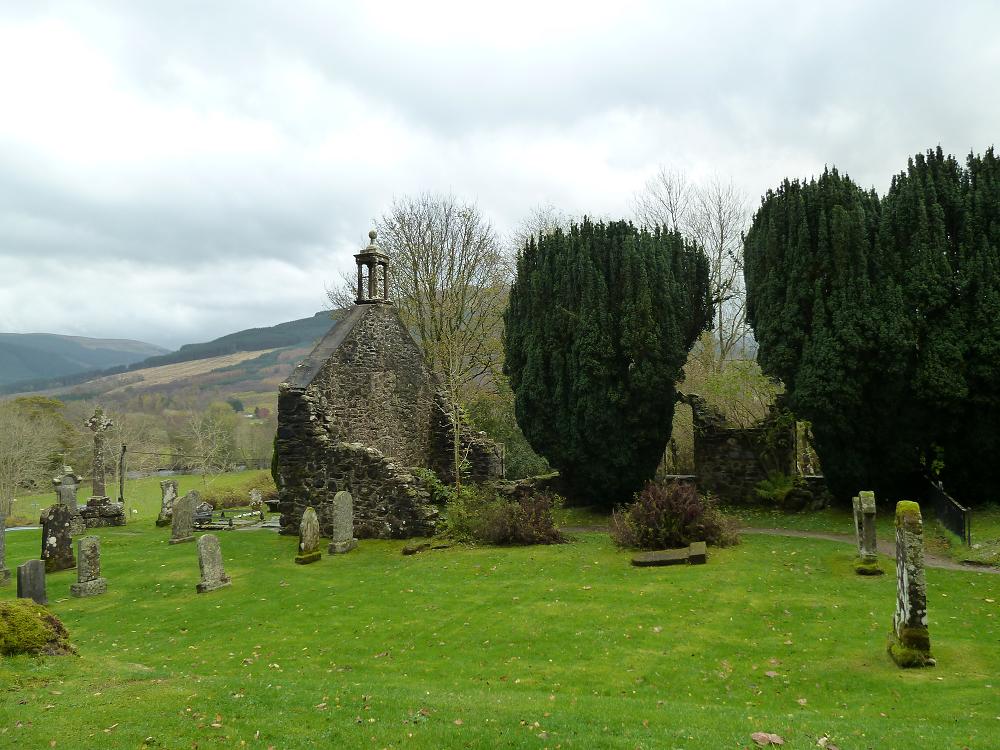
I'm taking a brief pause from my updates on the faeries of Dartmoor, to write of my adventures this past week in Aberfoyle and the surrounding Trossachs area. I hope to finish writing up my Dartmoor adventures soon though, I still have a few stories left to tell, I just haven't finished the research yet! So this past week, my partner and I have been wandering around the very rainy and autumnal Trossachs. The main reason for my wanderings was to visit Tom-nan-Aingeal, the Knoll of Fire, on one of the two days of the year it was seen as most special and magical, Samhain. The other being Beltane. Elizabeth Beauchamp explains more in 'The Braes O' Balquhidder' (1981), she describes it was a landmark traditionally associated with the pre-Christian days, and writes:
"In early days, and, it seems, right up until perhaps the beginning of the 19th century, twice a year, on the first of May and the first of November a fire was lit on Tom-nan-Aingeal. All other fires in the village were put out and up the folk went to the knoll of the fire to receive new fire to rekindle their hearths. This knoll probably had Druid associations."The exact date given for the Balquhidder Samhain celebrations does seem to vary, with some sources saying the Samhain celebrations were held on the 31st October, and others saying 1st November. As you might have already guessed, the Knoll of Fire is also associated with the fairies. Balquhidder itself is described by some as a 'thin place', where the veil between this world and the otherworld is particularly thin, perhaps allowing the faery folk to pass between worlds. It is also worth a mention that the Reverend Robert Kirk, writer of the 'Secret Commonwealth of Elves Fauns and Fairies', was minister of the church located next to Tom-nan-Aingeal, and in his manuscript wrote:
"There Be manie places called Fayrie hills, which the mountain people think impious and dangerous to peel or discover, by taking earth or wood from them; superstitiously beleiving the souls of their predecessors to dwell yr. And for that end (say they) a Mote or Mound was dedicated beside everie Church-yard, to receave the souls, till their adjacent Bodies arise, and so became as a Fayrie-hill. They using bodies of air when called abroad."He does not mention the Tom-nan-Aingeal mound at Balquhidder where he was once minister, but as that mound is located a short way behind the church and is said locally to be a fairy hill, perhaps it was this church and mound he had in mind while righting this, we can only speculate. For more information on Robert Kirk and the Fairies, please see my previous entries on Balquhidder, Aberfoyle Church, and Doon Hill.
The main source for information connecting the knoll with the fairies is an essay titled 'Balquhidder Revisted' written by Margaret Bennett and published in 'Good People, New Fairylore Essays' (1991) by Peter Narvaez. Margaret talked to the people of Balquhidder and collected their stories, including those of local children, and a 90 year old lady, refered to in the essay as Mrs MacGregor. She said that she believed that Robert Kirk would go out there to the fairy hill near the church in Balquhidder, and to Strathyre as well. The author, when visiting the local school, was told by a child that "I heard that there was a fairy mound up the back behind the church... it sounds hollow there, like it's empty inside." Other children agreed and said that it is "different to other places" which don't have the same hollow sound when you tap it, and that it is "very special.. where the fairies live". The children described the fairies as small, the size of your finger or thumb, and like themselves but smaller, and looking like ordinary people but wearing kilts. Interestingly, Robert Kirk himself described the fairies as "Their apparell and speech is like that of the people and countrey under which they live: so are they seen to wear plaids and variegated garments in the high-lands of Scotland". One child goes into further detail and describes them as wearing the local MacLaren tartan and suggests that perhaps the fairies are the spirits of the MacLarens who once lived in the area. Which also seems eerily similar to theories written by Robert Kirk. Further information is given in this essay, but it would be unfair of me to quote too much of it, and I encourage those interested to purchase a copy of the book.
The book contains a photo of the fairy knowe, but until I visited the mound myself I was unsure of the actual location. Tom-nan-Aingeal has a very obvious gravestone on the top, of a past reverend of the church, and this did not feature in the photograph in the book. But once at the mound I came to the conclusion that the photo is taken from near the gravestone and looking towards the river, though it's difficult to be sure as there are no obvious landmarks in the photo. It was a very damp day when we visited, and I did gently tap the hill a few times but it was so covered with damp leaves that it was hard to tell if it did indeed seem hollow or not. Hopefully I've jumped to the right conclusion and this is indeed the fairy hill refered to in local stories, but if any locals are reading this and can confirm or correct me, I'd be very grateful for your input and comments!


The Secret Commonwealth of Elves Fauns and Fairies, Robert Kirk
The Braes O' Balquhidder, Elizabeth Beauchamp
Balquhidder Revisited, Margaret Bennett
Good People. New Fairylore Essays, P Narvaez
The Secret Commonwealth and the Fairy Belief Complex, Brian Walsh
Subscribe to:
Posts (Atom)